The fractional CTO model works well when it fits. When it doesn’t, the cost isn’t just wasted money. It’s lost time, a team without the leadership it needed, and decisions that went sideways because no one caught them.
Most founders who’ve had a bad experience say the same thing: they saw the warning signs early and hired anyway.
First: Do You Need One?
Most fractional CTO services skip this question. That includes us. The default pitch is about value and cost savings, not about the cases where the model doesn’t fit. So let’s name those first.
You need someone to build, not lead. A fractional CTO sets direction, reviews architecture, runs hiring, and preps you for investors. They don’t write code 40 hours a week. If your gap is execution, a founding engineer is a better hire.
Your team needs someone present every day. If engineers are blocked waiting for decisions, if your team is growing fast and culture is still forming, or if you’re past 20 engineers and need active daily management, part-time leadership won’t be enough. The model has a ceiling.
You want the title more than the work. Some founders hire a fractional CTO for credibility with investors or to have someone technical on the org chart. That’s a use case, but it’s usually better served by an advisor or a one-off engagement than a monthly retainer.
You’re pre-product with no team yet. If you haven’t hired anyone and nothing has been built, what you need is a technical co-founder or a senior first hire, not an advisor. A fractional CTO without a team to lead is expensive and underused.
If none of those apply, the model is worth exploring. The risks below are about how it goes wrong even when the fit is right.
Capacity Risks
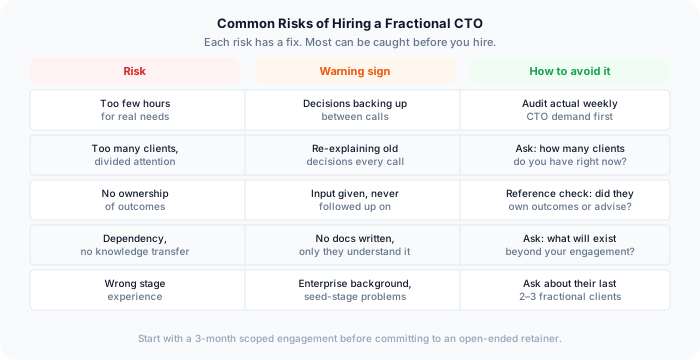
Not Enough Hours for What You Need. This is the most common failure. A founder hires five hours a week because the cost fits the budget. But the company has six developers, live architectural decisions, and a fundraise coming. Five hours doesn’t cover it.
The fractional model works when the demand is part-time. It breaks down when you need full-time leadership but buy part-time to save money. The result is a leader who’s always behind, decisions sitting in their queue, and a team that learns to work around them.
Be honest about your weekly CTO-level demand before agreeing on hours. If someone needs to be reachable daily, a ten-hour retainer won’t work. This comparison helps you figure out which model fits.
Divided Attention. A fractional CTO works with multiple clients. It means divided attention. How much that matters depends on who they are and how many clients they carry.
Two to three clients is manageable. More than that, context starts to slip. You end up re-explaining decisions from three weeks ago because they’re spread too thin to hold it all.
Ask directly: how many clients do you have right now? What’s your cap? How do you handle conflicts when two clients need you at the same time? Good answers are specific. Vague answers about “managing priorities” are not.
Incentive Risks
No Skin in the Game. A full-time CTO lives with the consequences of their decisions. If the architecture breaks, they fix it. If a bad hire goes wrong, they manage the fallout. A fractional CTO can make a recommendation, move on to the next client, and never carry the consequence.
The incentive structure is different, and some people let that show. Look for patterns that suggest ownership: do they follow up on decisions they pushed for? Do they check in on outcomes, or just move to the next topic? The distinction matters.
Dependency Instead of Transfer. A good fractional CTO leaves you less dependent on them than when they started. Architecture documented, engineers more capable, playbooks written down. A bad one leaves you more dependent: decisions only they understand, systems only they can explain, and a quiet incentive to keep the engagement going.
Watch for it early. If documentation isn’t getting written, if knowledge is staying with them instead of transferring to the team, if they’ve become the only person who understands a key system, those are signs it’s going the wrong way. A good fractional CTO will welcome being held to that standard.
Fit Risks
Wrong Stage Experience. Someone who spent their career at large companies will struggle with seed-stage ambiguity. Someone who only knows early-stage startups may not know what Series A technical diligence looks like.
Stage match matters more than credential depth. Ask about their last two or three engagements. What stage were those companies? What did they do there? The answers reveal whether they’ve navigated the problems you’re about to have.
Jargon Instead of Clarity. If you can’t understand what someone is saying in the first conversation, that doesn’t get better. A fractional CTO’s job includes translating technical complexity into something a non-technical founder can act on. Defaulting to jargon, whether from habit or to seem impressive, is a problem day to day.
Test this in the first call: ask them to explain a technical concept in plain language. How they handle it tells you a lot.
Equity Asks Without Commitment. Some fractional CTOs ask for meaningful equity: 0.5 to 1 percent or more. That can be fair with commitment and proper vesting terms. It’s not fair as a cash-saving ask with no strings attached.
If equity comes up, push on the terms. What vesting schedule? What cliff? What happens if the engagement ends after six months? A vague equity ask with no structure is usually a signal to negotiate firmly or walk away.
Warning Signs Before You Hire
Patterns that don’t improve after you hire:
- Recommends specific technologies before understanding your business
- Dismisses your existing team in the first conversation
- Won’t provide references from past fractional clients
- Promises speed or outcomes without scoping the work first
- Can’t explain what they’d focus on in the first 30 days
- Hasn’t worked with companies at your stage
None of these are disqualifying alone. Multiple in the same conversation usually are.
How to Protect Yourself
Start with a time-boxed engagement. Three months with a defined deliverable is low-risk compared to an open-ended retainer. If they’re good, extending is easy. If they’re not, you’ve capped the downside.
Define what good looks like before they start. What will exist at the end of 90 days? What decisions will they own? How quickly should they respond? Put it in writing. It protects you and helps any serious person do better work.
Call their references and ask specific questions: Did knowledge transfer to the team or stay with them? Would you hire them again and why? The second question is the most useful one.
For more on how to structure the hiring process, see the fractional CTO guide. For a benchmark on what these engagements cost, see fractional CTO pricing.
Not sure whether your shortlist is worth trusting? Tell us what you’re looking for and we’ll help you think it through.