If you’re building a startup and facing critical technical decisions, but can’t afford or don’t need a full-time CTO, you’re not alone. According to CB Insights, 23% of startups fail due to not having the right team in place, including technical leadership gaps.
Enter the fractional CTO: a seasoned technology executive who provides strategic leadership to multiple companies on a part-time basis. This model has exploded in popularity, with searches for “fractional CTO” increasing over 300% since 2020 according to Google Trends data.
This guide covers everything you need to know about fractional CTOs: what they actually do day-to-day, how much they cost, and whether they’re the right choice for your startup.
What is a Fractional CTO?
A fractional CTO (Chief Technology Officer) is an experienced technology executive who provides part-time strategic leadership to companies that need senior technical guidance but aren’t ready for (or can’t afford) a full-time CTO.
The term “fractional” refers to the time commitment: instead of working full-time for one company, a fractional CTO splits their time across 2-5 different organizations, typically dedicating anywhere from 5 to 20 hours per week to each client.
This isn’t a new concept. It follows the same model as fractional CFOs, which have been common in the business world for decades. The fractional CTO role has gained traction since 2020 as startups recognize the value of senior technical leadership without the $250,000-$400,000+ annual cost of a full-time executive.
Fractional CTO vs. Full-Time CTO
| Aspect | Fractional CTO | Full-Time CTO |
|---|---|---|
| Time commitment | 5-20 hours/week | 40-60+ hours/week |
| Monthly cost | $3,000-$15,000 | $20,000-$35,000+ (salary + equity) |
| Engagement length | Months to years | Years (typically 3-5+) |
| Focus | Strategic decisions, architecture, mentoring | Everything technical |
| Availability | Scheduled time, async communication | On-call, always available |
| Equity | Usually none, or minimal | 0.5-3% typical |
Fractional CTO vs. Technical Advisor
A technical advisor typically provides occasional guidance, perhaps a monthly call or quarterly review. They might sit on your board or advisory committee and provide high-level input.
A fractional CTO, by contrast, is actively involved in your business. They attend team meetings, review code and architecture, make hiring decisions, and drive technical strategy. They’re an embedded member of your leadership team, not an external voice offering occasional input.
Fractional CTO vs. Consultant
Consultants typically engage for specific projects with defined scope and deliverables, like building an architecture document or evaluating a vendor. Their engagement ends when the project is complete.
A fractional CTO provides ongoing leadership. They develop deep context about your business, build relationships with your team, and grow with you over months or years. They’re not solving a single problem; they’re stewarding your entire technical direction.
What Does a Fractional CTO Actually Do?
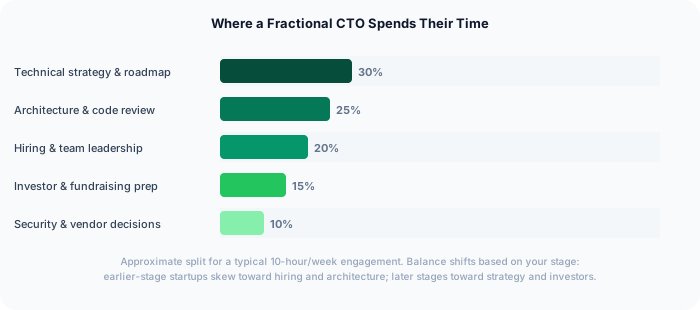
The day-to-day responsibilities of a fractional CTO vary based on your company’s stage, needs, and existing team. However, most fractional CTOs focus on these core areas:
1. Technical Strategy and Roadmap
A fractional CTO helps you answer fundamental questions about your technology:
- What’s the right tech stack for our product?
- How should we prioritize our development backlog?
- When should we invest in technical debt vs. new features?
- What’s our scaling plan as we grow from 100 to 10,000 to 1M users?
They create and maintain a technical roadmap that aligns with your business goals, ensuring your engineering efforts support your growth trajectory.
2. Architecture Design and Review
Whether you’re building a new product or scaling an existing one, architecture decisions have long-lasting implications. A fractional CTO provides:
- System design guidance: How should services communicate? What databases should you use? How do you handle authentication?
- Architecture reviews: Evaluating existing systems for scalability, security, and maintainability issues
- Technical due diligence: Assessing the technical viability of potential acquisitions, partnerships, or major investments
3. Team Building and Hiring
Many startups struggle with technical hiring, especially when the founders aren’t technical themselves. A fractional CTO can:
- Define role requirements and create job descriptions
- Screen resumes and conduct technical interviews
- Evaluate candidates’ technical abilities and culture fit
- Help structure compensation packages and equity grants
- Onboard new technical hires effectively
According to a LinkedIn Talent Solutions report, a bad hire can cost 30% of the employee’s first-year salary. For senior engineers earning $150,000+, that’s a $45,000+ mistake. A fractional CTO helps you avoid these costly errors.
4. Developer Team Leadership
If you already have engineers, a fractional CTO provides:
- Technical mentorship: Helping junior and mid-level developers grow their skills
- Process improvement: Implementing code review, CI/CD, testing practices, and agile workflows
- Conflict resolution: Resolving technical disagreements and ensuring alignment
- Performance management: Setting expectations and providing feedback
5. Vendor and Technology Evaluation
Startups face endless technology decisions: Which hosting provider? Build or buy? Which third-party APIs? A fractional CTO evaluates options objectively, considering:
- Total cost of ownership (not just sticker price)
- Scalability and long-term viability
- Integration complexity
- Security and compliance implications
- Vendor lock-in risks
6. Investor and Board Communication
Technical founders often underestimate how much time goes into investor communication. A fractional CTO can:
- Prepare technical sections of pitch decks
- Participate in due diligence calls with potential investors
- Explain technical decisions and roadmap to the board
- Provide credibility when you’re raising from technical VCs
7. Security and Compliance
As regulatory requirements grow (GDPR, SOC 2, HIPAA, etc.), startups need security expertise earlier than ever. A fractional CTO ensures:
- Security best practices are followed from day one
- Data is handled compliantly for your industry
- You have incident response plans in place
- Security is part of your development culture, not an afterthought
When Should You Hire a Fractional CTO?
Not every startup needs a fractional CTO, and the timing matters. Here are the most common scenarios where a fractional CTO makes sense:
You’re a Non-Technical Founder
The most common use case. If you have a business idea but lack the technical background to evaluate developers, make technology decisions, or lead an engineering team, a fractional CTO fills that gap.
According to a study by Founder Collective, approximately 40% of billion-dollar startup founders are non-technical. They succeed by surrounding themselves with strong technical leadership, whether co-founders, CTOs, or fractional executives.
You Have Developers but No Technical Leader
You’ve hired developers (maybe a freelancer, an agency, or a small team) but no one is providing technical leadership. Code is being written, but is it maintainable? Scalable? Secure?
A fractional CTO reviews what’s been built, course-corrects where needed, and provides the oversight your development team needs.
You’re Preparing for Fundraising
Investors conduct technical due diligence. They want to know:
- Is your technology defensible?
- Can it scale?
- Is the architecture sound?
- Do you have the right technical leadership?
A fractional CTO helps you prepare for these questions and often participates in due diligence calls, adding credibility to your pitch.
You’re Scaling Rapidly
Growth creates technical challenges: performance issues, architectural bottlenecks, team scaling problems. A fractional CTO has seen these patterns before and helps you handle scaling challenges without reinventing the wheel.
Your Full-Time CTO Just Left
CTO departures can be destabilizing. A fractional CTO provides continuity while you search for a permanent replacement, ensuring technical decisions keep moving and the team stays focused.
You’re Not Ready for a Full-Time CTO
Maybe you need strategic guidance but don’t have enough ongoing technical work to justify a $300,000+ hire. A fractional CTO gives you the expertise when you need it, without the overhead when you don’t.
When Should You NOT Hire a Fractional CTO?
A fractional CTO isn’t always the right answer. Consider alternatives if:
You Need Full-Time Hands-On Development
Fractional CTOs provide leadership, not labor. If you need someone writing code 40 hours a week, you need a founding engineer or senior developer, not a fractional executive.
You Have Strong Technical Co-Founders
If your founding team includes an experienced technical leader who can handle strategy, architecture, and team management, you probably don’t need external help, at least not yet.
You’re Not Ready to Invest in Technology
If your startup is still validating the market with no-code tools or manual processes, a fractional CTO may be premature. Focus on product-market fit first.
You Need Occasional Advice, Not Ongoing Leadership
If you just need a sounding board for occasional technical questions, consider a technical advisor instead. They’re typically less expensive and less time-intensive than a fractional CTO.
How Much Does a Fractional CTO Cost?
Fractional CTO costs vary widely based on experience, location, hours, and scope. Here’s what to expect:
Hourly Rates
| Experience Level | Hourly Rate |
|---|---|
| 10-15 years experience | $150-$250/hour |
| 15-20 years experience | $200-$350/hour |
| 20+ years, specialized expertise | $300-$500/hour |
Monthly Retainers
Most fractional CTOs prefer monthly retainers over hourly billing. This provides predictable income for them and predictable costs for you.
| Hours Per Week | Monthly Cost Range |
|---|---|
| 5 hours/week | $3,000-$6,000/month |
| 10 hours/week | $6,000-$12,000/month |
| 20 hours/week | $12,000-$20,000/month |
Location Matters
A fractional CTO based in San Francisco or New York will typically charge more than one in Austin, Denver, or a smaller city. Remote fractional CTOs based internationally may offer lower rates while still providing excellent expertise.
Equity Considerations
Unlike full-time CTOs who typically receive 1-3% equity, fractional CTOs usually don’t receive equity, or receive very small grants (0.1-0.5%) in exchange for reduced cash compensation.
Some fractional CTOs offer “equity-for-time” arrangements, accepting lower hourly rates in exchange for equity. Be careful with these arrangements: ensure the terms are clear and the fractional CTO’s interests are aligned with yours.
Comparing to Alternatives
| Option | Monthly Cost | What You Get |
|---|---|---|
| Fractional CTO | $5,000-$15,000 | Strategic leadership, architecture, team building |
| Full-time CTO | $25,000-$40,000 (salary + equity) | Everything, full-time |
| Technical Advisor | $500-$2,000 | Occasional guidance |
| Dev Agency (oversight) | $15,000-$50,000 | Development + PM, but often no strategic input |
How to Find a Fractional CTO
Finding the right fractional CTO requires effort, but there are several channels to explore:
1. Referrals and Networks
The best fractional CTOs often don’t need to market themselves. They’re busy with referrals. Ask:
- Other startup founders in your network
- Your investors (VCs often have networks of fractional executives)
- Accelerator/incubator alumni networks
- Technical advisors who might know good candidates
2. Fractional Executive Platforms
Several platforms specialize in connecting startups with fractional executives:
- TopCTO - Focuses specifically on fractional CTO placement
- Bolster - Executive talent marketplace including fractional roles
- The CTO Club - Community where many fractional CTOs participate
- PartnerHero - Offers fractional executive services
3. LinkedIn
Many experienced CTOs announce fractional availability on LinkedIn. Search for:
- “Fractional CTO” in titles
- “Part-time CTO” or “interim CTO”
- CTOs at startups who mention advisory work
4. CTO Communities
Active CTO communities include:
- CTO Craft - Slack community and events
- The CTO Connection - Peer groups and resources
- Rands Leadership Slack - Engineering leadership community
5. Startup Events and Meetups
Technical meetups, startup events, and conferences are good places to meet potential fractional CTOs. Many attend specifically to network with potential clients.
How to Evaluate a Fractional CTO
Once you’ve identified candidates, how do you evaluate them? Here’s a framework:
Experience and Track Record
- Relevant industry experience: Have they worked in your industry or with similar products?
- Stage experience: Have they worked with companies at your stage (pre-seed, seed, Series A)?
- Previous fractional work: Have they done this before, or is it new to them?
- References: Can they provide references from previous fractional clients?
Technical Credibility
- Hands-on background: Have they actually built things, or are they purely managerial?
- Current knowledge: Technology moves fast. Is their knowledge current?
- Depth vs. breadth: Do they have deep expertise in relevant areas, or just surface-level knowledge across many?
Communication and Fit
- Communication style: Do they explain technical concepts in ways you understand?
- Availability: Does their schedule work with your needs?
- Culture fit: Do they align with your company’s values and working style?
- Ego check: Are they genuinely interested in helping, or focused on proving how smart they are?
Red Flags to Watch For
- No references or reluctant to provide them: Legitimate fractional CTOs have happy past clients
- Promises that seem too good: “I’ll have your MVP done in 2 weeks” is a red flag
- Dismissive of your current team: A good fractional CTO builds up your existing team
- Technology dogmatism: Insisting on specific technologies without understanding your context
- Lack of business understanding: Technology exists to serve business goals, not the reverse
Making the Relationship Work
Hiring a fractional CTO is just the beginning. Here’s how to set up the engagement for success:
Define Clear Expectations
Before starting, align on:
- Time commitment: How many hours per week? Which days?
- Availability: How quickly should they respond to messages? When are they on-call?
- Deliverables: What tangible outcomes do you expect?
- Decision rights: Which decisions can they make autonomously? Which require your input?
Establish Communication Rhythms
Typical rhythms include:
- Weekly 1:1: 30-60 minute strategic alignment call with the CEO/founder
- Team standups: Joining daily or weekly development standups
- Slack/async: Ongoing communication between scheduled meetings
- Monthly reviews: Stepping back to assess progress and adjust priorities
Integration with Your Team
A fractional CTO should feel like part of your team, not an outsider. Help them by:
- Introducing them to all team members and explaining their role
- Giving them access to relevant tools, repositories, and documentation
- Including them in relevant meetings and decision-making processes
- Making clear to the team what authority the fractional CTO has
Regular Check-Ins and Feedback
Schedule regular reviews (monthly or quarterly) to assess:
- Is the engagement delivering expected value?
- Are there areas where you need more or less support?
- Is communication working well?
- Should the time commitment change?
Transitioning Away from a Fractional CTO
Fractional CTO engagements don’t last forever. Eventually, you’ll either:
- Hire a full-time CTO: Your company has grown enough to need and afford full-time leadership
- Reduce scope: Your technical team can handle more independently
- End the engagement: Your needs have changed
A good fractional CTO prepares for these transitions. They should:
- Document key decisions, architecture, and processes
- Mentor internal team members who can take on more responsibility
- Help you hire and onboard their replacement if needed
- Provide a transition period rather than an abrupt ending
Fractional CTO Alternatives
Depending on your situation, these alternatives might be better fits:
Founding Engineer
If you need someone to actually build your product, not just oversee it, consider a founding engineer. They’re typically earlier-career engineers willing to take significant equity in exchange for being the first technical hire.
Technical Co-Founder
If you’re at the very beginning and can offer substantial equity (10-30%), you might attract a technical co-founder who’s fully invested in your vision.
CTO-as-a-Service
Some agencies offer “CTO-as-a-Service” packages that combine fractional CTO leadership with development resources. This can be useful if you need both strategy and execution.
Technical Advisor
For occasional guidance without ongoing involvement, a technical advisor (with less time commitment and cost) might suffice.
Development Agency + PM
A good development agency with strong project management can handle execution. Combined with occasional technical advisory input, this might meet your needs at certain stages.
Common Questions About Fractional CTOs
Can a fractional CTO work remotely?
Absolutely. Most fractional CTO engagements are remote, especially post-2020. Video calls, async communication, and collaborative tools make remote leadership effective. Some fractional CTOs offer occasional on-site visits for workshops, team meetings, or intensive planning sessions.
How long does a typical engagement last?
Engagements typically range from 6 months to 2+ years. Short engagements (3-6 months) often focus on specific projects like architecture redesign or fundraising prep. Longer engagements provide ongoing strategic leadership.
Should a fractional CTO write code?
Generally, no. A fractional CTO’s value is strategic, not tactical. If they’re spending significant time coding, you might be better served by a senior developer who costs less. That said, fractional CTOs should be able to review code, understand technical implementations, and dive deep when necessary.
How do I know if I’m getting value?
Measure outcomes:
- Are technical decisions being made faster and with more confidence?
- Is your development team more productive and aligned?
- Are you avoiding costly mistakes (bad hires, wrong technology choices)?
- Are investors/stakeholders more confident in your technical direction?
Can a fractional CTO become a full-time CTO?
Sometimes. If the relationship is working well and your company grows, a fractional CTO might transition to full-time. However, many fractional CTOs prefer the variety and flexibility of working with multiple companies. Discuss this possibility early if it’s important to you.
Key Takeaways
- A fractional CTO provides senior technical leadership part-time, typically 5-20 hours per week
- Costs range from $3,000-$15,000/month, significantly less than a full-time CTO
- They’re ideal for non-technical founders, companies with development teams but no technical leader, or startups preparing to scale or fundraise
- Find them through referrals, fractional platforms, or CTO communities
- Evaluate based on relevant experience, technical credibility, communication skills, and references
- Set up success with clear expectations, communication rhythms, and regular reviews
- Consider alternatives like founding engineers, technical advisors, or development agencies depending on your specific needs
The right fractional CTO can be transformational for your startup, providing the technical leadership you need to make confident decisions, build the right team, and scale your technology alongside your business.
Need help finding a fractional CTO for your startup? Get matched with vetted technical leaders who fit your stage, industry, and needs.