Leadership

The Non-Technical Founder's Guide to Building Tech Products

How to evaluate developers, make smart tech decisions, and avoid costly mistakes when building a startup without a technical background.

By FCTO Team March 3, 2026 14 min read

You have a business idea, deep domain expertise, and the drive to build something meaningful. But you don’t write code, and every tech decision feels like walking through a minefield blindfolded.

You’re not alone. According to research on successful startup founders, approximately 40% of billion-dollar company founders are non-technical. Names like Brian Chesky (Airbnb), Whitney Wolfe Herd (Bumble), Sara Blakely (Spanx), and Joe Gebbia (Airbnb) built massive technology companies without engineering backgrounds.

The key isn’t becoming technical yourself. It’s learning how to make technical decisions, evaluate technical people, and build the right team around you.

This guide will teach you exactly that.

The Non-Technical Founder’s Mindset

Before getting into tactics, here’s the mindset that successful non-technical founders cultivate:

You Don’t Need to Become a Developer

Some non-technical founders try to learn to code. While coding literacy can help, attempting to become a developer yourself is usually the wrong use of your time. Your job is to:

  • Understand your customers deeply
  • Define what needs to be built (not how)
  • Find and evaluate great technical people
  • Make business decisions informed by technical reality
  • Communicate vision and requirements clearly

You should learn enough to have informed conversations, not enough to write production code.

Your Non-Technical Background is an Asset

Non-technical founders often have advantages:

  • Customer focus: You think about problems, not solutions
  • Business acumen: You understand markets, unit economics, and sales
  • Communication skills: You can explain complex ideas simply
  • Fresh perspective: You’re not constrained by “how things are done”

Many purely technical founders build impressive technology that nobody wants. Your job is to make sure what gets built matters to customers.

Technical Literacy vs. Technical Skill

There’s a difference between:

  • Technical literacy: Understanding concepts, tradeoffs, and implications well enough to make decisions
  • Technical skill: Being able to implement solutions yourself

You need the former. You don’t need the latter.

Essential Technical Concepts to Understand

You don’t need to know how to code, but you should understand these fundamentals:

Frontend vs. Backend

Frontend (client-side): What users see and interact with: the interface, buttons, forms, and visual design. Built with technologies like React, Vue, or basic HTML/CSS.

Backend (server-side): The logic behind the scenes: databases, business rules, authentication, and APIs. Built with technologies like Node.js, Python, or Ruby.

Why it matters: When hiring or evaluating, understand whether you need frontend skills, backend skills, or both (full-stack).

Databases

Databases store your application’s data: users, transactions, content, everything persistent.

Types include:

  • SQL databases (PostgreSQL, MySQL): Structured, reliable, good for most applications
  • NoSQL databases (MongoDB, Firebase): More flexible structure, good for specific use cases

Why it matters: Database choices affect performance, cost, and how easily you can query your data. Poor database design is expensive to fix later.

APIs

API (Application Programming Interface): How different software systems communicate. When your app talks to Stripe for payments or Twilio for SMS, it’s using their APIs.

Why it matters: Modern products are built by connecting APIs together. Understanding this helps you evaluate “build vs. buy” decisions.

Technical Debt

Technical debt is the accumulated cost of shortcuts taken during development. Like financial debt, it accrues interest. Future development becomes slower and more expensive.

Some debt is strategic (ship faster now, clean up later). Too much debt paralyzes development.

Why it matters: You’ll face tradeoffs between speed and quality. Understanding technical debt helps you make informed decisions.

Scalability

Scalability is how well your system handles growth. Can it serve 100 users? 10,000? 1 million?

Why it matters: You don’t need to scale for millions on day one, but you should know when scaling concerns are legitimate vs. premature optimization.

Security Basics

Security is about protecting your users’ data and your business from attacks.

Key concepts:

  • Authentication: Verifying who users are (login systems)
  • Authorization: Controlling what users can access
  • Encryption: Protecting data in transit and at rest
  • Compliance: Meeting regulatory requirements (GDPR, HIPAA, etc.)

Why it matters: Security breaches destroy trust and can kill startups. Take it seriously from day one.

How to Evaluate Developers

Hiring technical talent is one of the hardest challenges for non-technical founders. Here’s how to do it without being able to evaluate code yourself:

Look for Evidence of Shipping

The best predictor of future building is past building. Look for:

  • Shipped products: Can they show you things they’ve built that real users use?
  • GitHub/portfolio: Do they have public work you can see?
  • Side projects: Do they build things because they enjoy it?

Ask: “Show me something you’ve built that you’re proud of. Walk me through the decisions you made.”

Great engineers get excited talking about their work. They can explain why they made choices, not just what they built.

Check References Thoroughly

Reference calls are underused. When calling references, ask:

  • “What was it like working with [name] on a daily basis?”
  • “How did they handle ambiguity or changing requirements?”
  • “What would you say their biggest weakness is?”
  • “Would you hire them again? Why or why not?”
  • “How did they communicate with non-technical stakeholders?”

Listen for hesitation. Great references are enthusiastic; lukewarm references are red flags.

Use Technical Evaluators

You can’t evaluate code quality yourself, so get help:

  • Technical advisor: Someone who can interview candidates and review their work
  • Fractional CTO: Part-time technical leadership who can handle hiring (see our Fractional CTO Guide)
  • Technical interview services: Companies like Karat provide outsourced technical interviews
  • Paid trial project: Give candidates a small, paid project to evaluate their work

Never hire purely on your gut. Get technical validation.

Evaluate Communication

Since you’re non-technical, communication matters enormously. During interviews:

  • Ask them to explain a technical concept to you
  • See if they adjust their language based on your understanding
  • Notice if they make you feel stupid or help you feel informed
  • Ask how they’ve worked with non-technical stakeholders before

Engineers who can’t communicate with you will struggle on your team, no matter how talented they are.

Red Flags in Developer Hiring

Watch for these warning signs:

  • Can’t show past work: Either new to the field or nothing worth showing
  • Overly complicated explanations: May indicate unclear thinking or inability to simplify
  • Dismissive of your questions: You’ll be their stakeholder; disdain is a problem
  • Blame-focused when discussing past projects: Problems are always someone else’s fault
  • Technology dogmatism: “You have to use [X]” without understanding your context
  • Poor references or unwilling to provide them: What are they hiding?

Making Smart Tech Decisions

You’ll face many technology choices. Here’s how to approach them:

When to Build vs. Buy

The “build vs. buy” question applies constantly:

Buy/Use existing solutions when:

  • The problem is well-solved (authentication, payments, email)
  • It’s not your core differentiator
  • Time-to-market matters more than customization
  • You don’t have the expertise to build it well

Build custom when:

  • It’s your core value proposition
  • Existing solutions don’t fit your needs
  • You need full control over the experience
  • The cost of integration exceeds custom development

Rule of thumb: Buy everything that isn’t core to your differentiation. Your auth system won’t make users choose you; your unique value will.

Evaluating Technology Recommendations

When developers recommend technologies, ask:

  • “Why this technology over alternatives?”
  • “What are the tradeoffs?”
  • “Who else uses this for similar products?”
  • “How easy is it to hire developers who know this?”
  • “What happens if we need to change direction later?”

Good engineers welcome these questions. They can articulate reasoning, not just preferences.

How to Handle “You Wouldn’t Understand”

If someone says “it’s too technical to explain,” that’s a red flag. Competent engineers can explain concepts at different levels of abstraction. Possible translations:

  • “You wouldn’t understand” → They don’t understand it well enough to simplify
  • “Trust me, this is the right way” → They can’t articulate the reasoning
  • “It’s just how it’s done” → They might be cargo-culting without understanding

Keep asking questions. If they can’t help you understand, find someone who can.

Making Decisions Under Uncertainty

You won’t always have perfect information. When you need to decide:

  1. Get multiple perspectives: Don’t rely on one person’s opinion
  2. Understand the reversibility: Is this decision easy or hard to undo?
  3. Consider the worst case: What happens if this choice is wrong?
  4. Time-box your research: At some point, decide and move forward
  5. Document reasoning: Record why you decided what you decided

Some decisions (database choice, core architecture) are hard to reverse. Others (which UI library, specific service providers) are relatively easy. Invest decision-making effort accordingly.

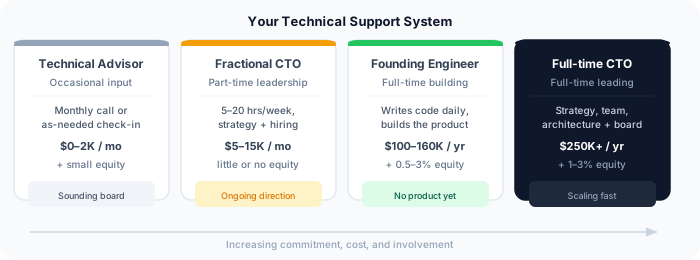
Building Your Technical Support System

As a non-technical founder, you need technical people you can trust:

Technical Advisor

A technical advisor provides occasional guidance, perhaps a monthly call or as-needed consultations. They can:

  • Review major technical decisions
  • Help evaluate job candidates
  • Provide a sounding board for questions
  • Introduce you to their network

Finding advisors:

  • Your personal network
  • Investor introductions
  • Technical communities and meetups
  • LinkedIn outreach to relevant CTOs/engineers

Compensation: Often small equity grants (0.1-0.5%), nominal cash, or simply goodwill.

Fractional CTO

A fractional CTO provides more active involvement, typically 5-20 hours per week. They can:

  • Set technical strategy and architecture
  • Lead or assist with hiring
  • Manage and mentor developers
  • Interface with investors on technical matters

This is the best option when you need ongoing technical leadership but can’t afford or don’t need a full-time CTO.

Your Developer Team

Whether you hire a founding engineer, freelancers, or an agency, cultivate relationships where:

  • They explain things in accessible language
  • They bring you options, not just problems
  • They’re honest about tradeoffs and timelines
  • They push back when your requests don’t make sense

The best technical partners make you smarter about technology, not more dependent on them.

Peer Non-Technical Founders

Other non-technical founders who’ve built tech products are invaluable. They can share:

  • What mistakes they made
  • Which resources helped them learn
  • Referrals for trusted technical help
  • Emotional support (it’s hard!)

Find them through founder communities, accelerators, or simply reaching out to companies you admire.

Common Mistakes to Avoid

Learn from what trips up other non-technical founders:

Choosing Developers on Price Alone

The cheapest developer is rarely the best value. Poor development creates technical debt, bugs, and rework that cost far more than the initial savings.

Better approach: Set a reasonable budget range and optimize for quality within it. Check references, evaluate past work, and invest in technical validation.

Over-Specifying Implementation

You should specify what you need, not how to build it. Prescribing implementation details when you don’t understand them leads to suboptimal solutions.

Better approach: Describe the problem clearly, define success criteria, and let technical people propose solutions. Ask “why” to understand their reasoning.

Ignoring Technical Advice

You hired technical people for their expertise. If they consistently recommend something and you override them without technical understanding, you’re not leveraging their value.

Better approach: When you disagree, ask questions to understand their perspective. Your instincts about the business may be right, but their instincts about the technology probably are too.

Not Setting Clear Requirements

Vague requirements lead to misaligned expectations. “Build a social network” means different things to different people.

Better approach: Be specific about user stories, features, and success criteria. Use mockups or wireframes to visualize what you want. Write things down and get agreement.

Avoiding Hard Conversations

Problems with developers (missed deadlines, quality issues, communication gaps) only get worse when ignored.

Better approach: Address issues directly and early. Give specific feedback. If someone isn’t working out, make changes sooner rather than later.

Trying to Do It All Yourself

Some non-technical founders try to become developers rather than finding technical partners. This usually takes longer and produces worse results.

Better approach: Focus on your strengths. Learn enough to have informed conversations, but spend most of your time on customers, business, and team.

Resources for Non-Technical Founders

Books

  • “The Lean Startup” by Eric Ries: Foundational on building products iteratively
  • “Inspired” by Marty Cagan: Product management principles
  • “The Mom Test” by Rob Fitzpatrick: How to talk to customers effectively

Courses and Content

  • Y Combinator Startup School: Free courses on startup fundamentals
  • Product School resources: Product management training
  • Reforge: Advanced growth and product courses

Communities

  • Indie Hackers: Community of builders with many non-technical founders
  • Founder Slack groups: Various communities organized by stage or industry
  • Twitter/X startup community: Follow founders who share their journey

Tools for Prototyping

Before hiring developers, you can often validate ideas with:

  • Figma: Design mockups and prototypes
  • Notion: Documentation and simple databases
  • Airtable: Spreadsheet-database hybrid for managing data
  • Webflow/Bubble: No-code website and app builders
  • Zapier: Connect tools together without code

Key Takeaways

  • 40% of billion-dollar founders are non-technical. Your background isn’t a barrier
  • Develop technical literacy, not technical skill. You need to make informed decisions, not write code
  • Learn the fundamentals: frontend/backend, databases, APIs, technical debt, security basics
  • Evaluate developers through shipped work, references, and technical evaluators, not just interviews
  • Build a technical support system: advisors, fractional CTOs, trusted developers, and peer founders
  • Avoid common mistakes: don’t choose on price alone, do set clear requirements, don’t ignore technical advice
  • Your job is customer understanding, vision, and team building. Find great technical partners to handle the implementation

The best non-technical founders don’t become technical. They become exceptional at understanding customers, defining problems, and surrounding themselves with talented people who can build solutions.


Need help navigating your technical journey? Get matched with fractional CTOs, founding engineers, or development partners who can guide you.

Want to learn more?

Explore our other guides and resources for startup founders.