A non-technical founder lets her first engineer make all the technical calls. Eighteen months in, the architecture from week one requires a six-month rebuild before the product can support enterprise customers. The decision didn’t feel important when it was made. It cost the company a fundraising cycle. The difference between startups that navigate these moments well and those that don’t almost always comes down to one thing: technology leadership.
What is Technology Leadership?
Technology leadership is the organizational function responsible for setting technical direction, making architectural decisions, building and managing engineering teams, and ensuring technology supports business goals.
It’s not the same as technical skill. A great engineer who writes excellent code isn’t automatically a great technology leader. Technology leadership requires several things that individual technical skill doesn’t provide: vision about where technology needs to go to support future goals, sound judgment on architectural and build-vs-buy choices, the ability to attract and develop technical talent, clear communication between technical and business stakeholders, process design that lets teams deliver consistently, and the foresight to identify technical risks before they become crises.
In a five-person startup, technology leadership might mean a founding engineer making pragmatic decisions quickly. At a 500-person company, it means a VP of Engineering and CTO working in concert with multiple engineering managers. The function is the same. The structure that supports it changes.
Why Technology Leadership Matters Early
Many founders treat technology leadership as something they’ll address later, when they’re bigger. This is usually a mistake.
Architecture choices made in month two can either enable or constrain growth for years. The hiring norms established by your first technical hire shape what kind of engineers join you next. Engineering culture (the implicit values around speed vs. quality, documentation vs. shipping) is set early and hard to change later. Technical debt accumulated in the early months compounds as the codebase grows. None of this requires a full-time CTO from day one, but it does require intentional, experienced technical judgment at key moments.
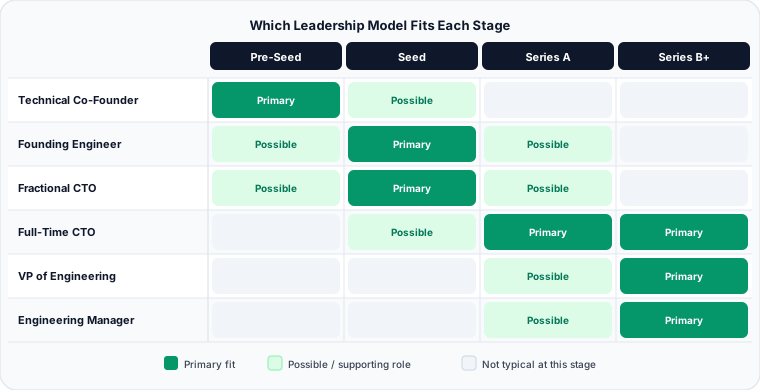
The Models of Technology Leadership
Technology leadership can come from different sources depending on your stage, budget, and needs.
Technical Co-Founder
This works best when the partnership is genuine: built on shared mission and complementary strengths, not just role-filling. A technical co-founder brings technology leadership from day zero, typically with significant equity (15-40%) and full commitment to the company. It’s hard to find and expensive in equity, but when it works, it’s the strongest possible foundation for technical direction.
Founding Engineer
A founding engineer is typically the first non-co-founder technical hire. They provide hands-on leadership: building the product, making technical decisions, and eventually mentoring engineers who follow. The distinction from a CTO is focus. Founding engineers are primarily builders who also lead. CTOs are primarily leaders who may also build. The founding engineer is the right choice for seed-stage startups that need someone to own technical execution, not just advise on it.
Fractional CTO
A fractional CTO provides part-time executive technical leadership, typically 5-20 hours per week. They handle strategy, architecture oversight, and investor communication without the full-time cost of a permanent CTO. This suits early-stage startups where the volume of strategic technical work doesn’t justify full-time leadership, but the decisions matter enough to need senior expertise. Read our Fractional CTO vs Full-Time CTO guide for a detailed cost-benefit comparison.
Full-Time CTO
A full-time Chief Technology Officer dedicates 100% of their time to your company and owns all aspects of technology: strategy, architecture, team, and execution. This is the right model when technology is the core competitive differentiator, the engineering team is growing rapidly, or technical decisions are frequent and high-stakes enough that part-time oversight isn’t sufficient.
VP of Engineering
A VP of Engineering focuses on the operational side: managing engineering teams, running processes, and ensuring delivery. Unlike a CTO (who focuses on strategy and vision), the VP of Engineering ensures the organization can execute. This role makes sense at growth-stage companies that have technical strategy covered by a CTO or fractional CTO but need operational engineering leadership to scale the team.
Engineering Manager
An engineering manager leads a specific team or function, typically 5-15 engineers. They’re a first-line leadership layer handling performance management, career development, and team process. This layer becomes necessary when a company has 15 or more engineers and direct management from a CTO or VP becomes infeasible.
Technology Leadership by Company Stage
Pre-Seed / Idea Stage
The goal at this stage is validating the idea, not building perfect technology. What you need is someone who can make pragmatic technical decisions fast: usually a technical co-founder or the founding team itself. A full-time CTO, detailed architectural planning, and complex engineering processes are all premature. One technical person making decisions quickly, using no-code tools where possible, building an MVP good enough to learn from: that’s the right model.
Seed Stage
You’ve validated the idea and you’re building a real product with a small team. What you need is someone who can own the technical direction, make stack choices, and build a foundation that won’t need to be completely rewritten in six months. A founding engineer who owns technical decisions is the most common answer. If you’re a non-technical founder, pairing them with a fractional CTO for strategic oversight is worth the cost. The key challenges at this stage: choosing the right stack, setting code quality standards, making build-vs-buy decisions, and preparing for first fundraising.
Series A
You have product-market fit signals and you’re hiring more engineers. What you need is someone who can manage a growing team, establish processes, and represent technology to the board and investors. Whether that’s the founding engineer promoted to CTO (if they’re ready), an external CTO hire, or a continued fractional CTO with strong senior engineers depends on what’s in front of you. The key challenges: hiring at scale, technical due diligence, managing technical debt, building engineering culture, and aligning technology with an accelerating product roadmap.
Series B and Beyond
The company is scaling rapidly and engineering teams may span 30-100 or more people. At this stage you need full-time, experienced executive-level technology leadership from a CTO who has done this before. Below them: a VP of Engineering to own operational delivery, and engineering managers leading individual teams. The key challenges shift to organizational structure, maintaining culture at scale, managing large technology budgets, owning security and compliance programs, and managing architectural evolution as the system grows under load.
How to Develop Technology Leadership Internally
The best technology leaders are often developed over time, not hired from outside.
Engineering leadership potential shows up before it gets a title. Look for engineers who take ownership beyond their assigned tasks, mentor junior colleagues without being asked, ask strategic questions about the product and business, proactively flag risks and propose solutions, and communicate clearly with non-technical people. These are not personality traits. They’re learnable behaviors that compound with the right environment.
Grow that potential with stretch assignments: responsibility for a project end-to-end rather than just implementation, inclusion in architecture and roadmap discussions, involvement in technical interviews and hiring decisions, and presenting technical topics to non-technical audiences. Pairing them with a fractional CTO or senior advisor as a mentor accelerates this considerably.
Leadership also can’t develop if someone is drowning in execution. As your founding engineer grows into a leadership role, hire junior engineers to absorb implementation work, protect time for planning and thinking, include them in business and strategy discussions, and give them budget authority for tooling and infrastructure decisions. The investment in their development is the cheapest form of leadership coverage you can buy.
Common Technology Leadership Mistakes
The mistakes that matter most — confusing technical skill with leadership ability, hiring the wrong stage CTO, waiting too long to establish any leadership structure — all trace back to the same root: using the wrong model at the wrong stage. The CTO job description guide covers stage-specific hiring requirements in detail. The When to Hire a CTO guide covers the specific signals that tell you a change is needed. If you’re evaluating whether your existing technical lead is ready to grow into a more senior role, the developer evaluation guide has frameworks that apply here too.
When to Bring in External Technology Leadership
External technology leadership is worth considering at several specific inflection points: when you’re approaching fundraising, a major product launch, or a significant scaling event; when your internal team is stuck and you need an experienced perspective on how to address compounding technical debt; when you’re making a critical platform or infrastructure decision; when you need credibility with investors and a senior technical voice adds legitimacy; or when your tech lead has just left and you need an interim leader to prevent a vacuum during the search.
The right technology leadership at each stage isn’t about the biggest title or the most expensive hire. It’s about having the right judgment applied to the right problems at the right time.
Figuring out your technology leadership needs? Tell us about your startup and we’ll help you find the right fit.