Most of the mistakes that cost founders months happen before a single resume is reviewed.
Before You Start: Define What You Actually Need
The biggest mistake founders make before posting a job is not knowing which role they actually need. A founding engineer owns the product with significant autonomy and equity, grows into leadership, and is a long-term bet on the company. A senior developer writes code within defined scope. A contractor builds specific features and leaves. A CTO leads strategy and team with less direct coding. Conflating these leads to an expensive over-hire or an ineffective under-hire. If you’re still deciding, read our founding engineer vs. CTO guide first.
On skills: resist the urge to list every technology that exists. Define the two or three things they genuinely must know to build your product now, and separate those from things they could learn on the job. Great engineers pick up new technologies. Overly specific requirements shrink your candidate pool and filter out exactly the kind of adaptable builders you want.
Experience level matters more than most founders realize. For pre-product stage, three to seven years is typically the sweet spot: enough skill to ship, still willing to take the risk. If you have an MVP already, you want five to ten years so they can improve what exists and start preparing to scale. Post-seed, seven to twelve years gives you someone who can begin building a team while still contributing heavily. Very senior engineers often want leadership roles or have compensation expectations that don’t fit early-stage constraints. Very junior engineers need more guidance than a non-technical founder can provide.
| Your Stage | Ideal Experience | Why |
|---|---|---|
| Pre-product | 3–7 years | Enough skill to build, still willing to take risk |
| MVP exists | 5–10 years | Can improve and scale what exists |
| Post-seed | 7–12 years | Can build team while contributing |
When writing the job description, lead with mission and ownership. The best founding engineers aren’t shopping for titles. They want to know what they’ll own, why it matters, and what kind of company they’re betting on. Be transparent about your stage and funding. Vague promises and laundry lists of every technology send exactly the wrong signal.
Where to Find Founding Engineer Candidates
The best founding engineers aren’t actively searching. They’re heads-down at their current company, building side projects, or fielding opportunities through people they already trust. That’s the case for outbound: GitHub profiles, conference speakers, and active open-source contributors are all worth approaching directly. Personalize every message — reference their specific work, explain what you’re building and why it’s worth their time, and lead with the opportunity rather than the job description. Cold outreach that reads like a template gets ignored by exactly the people you want.
Your personal network is the highest-trust channel even if it’s not the highest volume. Former colleagues, friends who are engineers, people who’ve expressed interest in what you’re building already — trust exists, they know how you work, and referral hires succeed at a higher rate than any other source. When you ask, be specific: “Know any engineers who’ve worked at early-stage startups and want more ownership?” gets dramatically better answers than “know any engineers?”
When those two channels are exhausted, job boards focused on startup roles — Wellfound and the Y Combinator Work at a Startup board are the most used — surface candidates explicitly looking for founding-stage positions. Hacker News monthly hiring threads attract a technically sharp audience worth reaching.
If speed matters more than cost, specialized startup recruiters can compress your timeline significantly. Contingency-based fees run roughly 20–25% of first-year salary. Expensive, but often worth it if the alternative is three months of failed searching.
The Evaluation Process
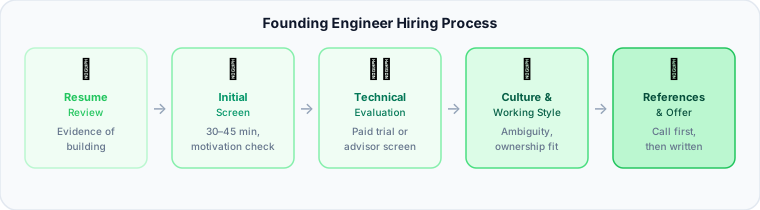
Resume review comes down to one signal: evidence of building. Shipped products, not just maintained ones. Previous startup experience or side projects that went live. Vague descriptions of “contributed to” or “helped build” are yellow flags: founding engineers tend to have clear personal ownership of outcomes. Job-hopping without an obvious growth trajectory is worth noting, not disqualifying on its own.
The initial screen (thirty to forty-five minutes) validates the resume and tells you whether there’s a real person behind it. Ask them to walk you through something they built end-to-end. Listen for how they explain technical decisions to a non-technical audience, whether they’ve thought about why the product mattered beyond the code, and whether they’ve done any homework on what you’re building. Genuine curiosity about your problem is a better signal than polished answers.
Technical evaluation is where non-technical founders get stuck. Algorithm interviews don’t predict founding engineer success. They test skills a founding engineer will rarely use. The better options: have a trusted technical advisor or fractional CTO run a real technical screen; pay the candidate for a small, real project (eight to twenty hours) and evaluate actual work; or do a deep portfolio review where they walk through past decisions, trade-offs, and challenges. Our guide on how to evaluate developers covers each of these methods in detail. What you’re looking for is pragmatic thinking, not perfection. Can they ship working software? Do they make sensible decisions when requirements aren’t fully defined?
Culture and working style is the screen that matters most and gets skipped most often. Ask how they’ve handled significant ambiguity. Ask what they do when they disagree with a decision. Ask what they need to do their best work. A founding engineer who needs detailed specs and clear process will struggle in a three-person startup where both are frequently absent. What you want is someone who finds ambiguity energizing rather than paralyzing, and who takes ownership of outcomes rather than waiting for direction.
Reference checks are non-negotiable and almost always rushed. Call at least two references and ask substantive questions: how they handled unclear or changing requirements, what their biggest area for growth is, and whether the reference would hire them again and for what kind of role. Enthusiastic, specific praise is a good sign. Hesitation, generic answers, or “they’re great but…” are worth taking seriously.
Common Evaluation Mistakes
The most common is evaluating technical ability in the wrong way: either skipping it entirely because you’re non-technical, or running algorithmic whiteboard screens that test skills a founding engineer will never use. Neither gives you useful signal. Use a technical advisor and a real work sample instead.
Under-weighting motivation is the second failure mode. Why someone wants this role matters as much as whether they can do it. Engineers joining for equity upside alone tend to leave when a better-compensated offer arrives. Engineers joining because they believe in what you’re building stay through the hard stretches. These two types look similar in an interview. Both say the right things about ownership and impact. The difference shows up in specificity: a candidate who’s genuinely interested in your problem can talk about it with the same fluency they use to discuss the equity structure. If the most animated part of every conversation is vesting schedules, that’s a signal.
Finally: don’t rush because you’re desperate. Hiring the wrong person because you need someone is worse than continuing to search. A bad founding engineer hire costs months of productivity, introduces technical debt that can take years to undo, and damages team morale and trust. The pain of a longer search is real but finite. The pain of a wrong hire compounds.
Making and Closing the Offer
Call before you send anything in writing. Tell them you want to make an offer, walk through the terms verbally, explain the equity grant and vesting schedule, and answer questions in real time. Written offers sent cold without conversation feel transactional, which is exactly the wrong tone for a founding hire.
Negotiations are normal. If they want more salary, explore reducing equity. If they want more equity, explore reducing salary. If they have competing offers, don’t engage in a bidding war you’ll lose. Lean into what makes your opportunity unique: real ownership, the mission, the chance to shape a company from the beginning. Set a reasonable decision deadline, stay reachable during their consideration, and once they verbally accept, get the written offer signed quickly. Verbal yeses evaporate.
The First Ninety Days
The first week should have one goal: make them feel the decision was right. Get access and equipment sorted before day one. Walk through the codebase, the architecture, and the thinking behind key decisions. Set a clear first deliverable so they have something concrete to move toward. Ambiguity is fine eventually, but not on day three.
By the end of the first month, they should have shipped something meaningful. Not necessarily a major feature, but something real that demonstrates genuine autonomy. The working relationship norms (how you communicate, how decisions get made, what kind of feedback you each prefer) should be established explicitly, not assumed.
Ongoing: regular one-on-ones, direct and honest feedback, clear goals with enough autonomy to pursue them their own way. Founding engineers who feel micromanaged leave. Founding engineers who feel trusted and challenged tend to become the people who build the company.
The search takes longer than founders expect. The right person is worth the wait.
Before you hire, read our guides on founding engineer compensation and founding engineer vs. CTO to make sure you’re hiring the right role at the right time.
Need help with your technical hiring process? Get matched with experienced technical leaders who can help you find and evaluate founding engineers.